"Son," said my mother,
When I was knee-high,
"you've need of clothes to cover you,
and not a rag have I.
"There's nothing in the house
To make a boy breeches,
Nor shears to cut a cloth with,
Nor thread to take stitches.
"There's nothing in the house
But a loaf-end of rye,
And a harp with a woman's head
Nobody will buy,"
And she began to cry.
That was in the early fall.
When came the late fall,
"Son," she said, "the sight of you
Makes your mother's blood crawl,—
"Little skinny shoulder-blades
Sticking through your clothes!
And where you'll get a jacket from
God above knows.
"It's lucky for me, lad,
Your daddy's in the ground,
And can't see the way I let
His son go around!"
And she made a queer sound.
That was in the late fall.
When the winter came,
I'd not a pair of breeches
Nor a shirt to my name.
I couldn't go to school,
Or out of doors to play.
And all the other little boys
Passed our way.
"Son," said my mother,
"Come, climb into my lap,
And I'll chafe your little bones
While you take a nap."
And, oh, but we were silly
For half an hour or more,
Me with my long legs,
Dragging on the floor,
A-rock-rock-rocking
To a mother-goose rhyme!
Oh, but we were happy
For half an hour's time!
But there was I, a great boy,
And what would folks say
To hear my mother singing me
To sleep all day,
In such a daft way?
Men say the winter
Was bad that year;
Fuel was scarce,
And food was dear.
A wind with a wolf's head
Howled about our door,
And we burned up the chairs
And sat upon the floor.
All that was left us
Was a chair we couldn't break,
And the harp with a woman's head
Nobody would take,
For song or pity's sake.
The night before Christmas
I cried with cold,
I cried myself to sleep
Like a two-year old.
And in the deep night
I felt my mother rise,
And stare down upon me
With love in her eyes.
I saw my mother sitting
On the one good chair,
A light falling on her
From I couldn't tell where.
Looking nineteen,
And not a day older,
And the harp with a woman's head
Leaned against her shoulder.
Her thin fingers, moving
In the thin, tall strings,
Were weav-weav-weaving
Wonderful things.
Many bright threads,
From where I couldn't see,
Were running through the harp-strings
Rapidly,
And gold threads whistling
Through my mother's hand.
I saw the web grow,
And the pattern expand.
She wove a child's jacket,
And when it was done
She laid it on the floor
And wove another one.
She wove a red cloak
So regal to see,
"She's made it for a king's son,"
I said, "and not for me."
But I knew it was for me.
She wove a pair of breeches
Quicker than that!
She wove a pair of boots
And a little cocked hat.
She wove a pair of mittens,
She wove a little blouse,
She wove all night
In the still, cold house.
She sang as she worked,
And the harp-strings spoke;
Her voice never faltered,
And the thread never broke,
And when I awoke,—
There sat my mother
With the harp against her shoulder,
Looking nineteen,
And not a day older,
A smile about her lips,
And a light about her head,
And her hands in the harp-strings
Frozen dead.
And piled beside her
And toppling to the skies,
Were the clothes of a king's son,
Just my size.
✦
Analysis
The Ballad Of The Harp-Weaver: analysis
Introduction
"The Ballad Of The Harp-Weaver" is a long narrative ballad told by a grown son about one winter when he was a small boy. He and his widowed mother are desperately poor. They have no clothes for him, no fuel and almost no food. All they own is a harp "with a woman's head" that nobody will buy.
On Christmas Eve the mother sits at the harp and, through the night, weaves a whole wardrobe of fine clothes out of its strings. In the morning the son finds her frozen dead, smiling, with the clothes of "a king's son" piled beside her. The poem is about a mother's love and sacrifice, told as a fairy tale.
Summary
The poem is 126 lines long, so this summary follows its movements rather than each stanza. In early fall the mother tells her son there is nothing in the house to clothe him. There is only "a loaf-end of rye" and a harp nobody will buy, and she begins to cry. By late fall his "skinny shoulder-blades" stick through his clothes. She says it is lucky his father is dead and cannot see.
In winter the boy has no breeches or shirt and cannot go to school or play. His mother takes him on her lap to warm him. They rock to "a mother-goose rhyme" and are happy for half an hour. The boy, though, worries what people would say about such a big boy being sung to sleep.
The winter is harsh. Fuel is scarce and food expensive, and "A wind with a wolf's head" howls at the door. They burn the chairs and sit on the floor. Only one unbreakable chair and the unsellable harp remain.
On the night before Christmas the boy cries himself to sleep with cold. In the night his mother rises and sits in the one good chair, lit from nowhere he can see. She looks nineteen, with the harp against her shoulder. Her fingers weave bright and gold threads through the strings. She weaves a jacket, a red cloak, breeches, boots, a cocked hat, mittens and a blouse, singing all night.
When the boy wakes, she is still sitting with the harp, smiling, with "a light about her head." Her hands are in the strings, "Frozen dead." Beside her, piled high, are "the clothes of a king's son, / Just my size."
Themes and meaning
The central theme is a mother's self-sacrificing love. She gives everything she has to her son, and in the end she dies for him. Her last act is to clothe him, and she dies doing it. The final picture joins the mother's dying to the son's gift: "Frozen dead" is followed by "Just my size."
A second theme is poverty. The poem is specific about want. There is "not a rag," only "a loaf-end of rye," and the family burns its chairs for heat. The boy cannot go to school for lack of clothes. Poverty also brings shame, in the mother's "queer sound" and the boy's worry about "what would folks say."
A third theme is art as transformation. The harp is the one thing no one wants, yet it becomes the source of everything. Music turns into weaving: "the harp-strings spoke" while the cloth grows. The poem can be read as a picture of art making something from nothing, at great cost to the maker.
A fourth theme is miracle and transfiguration. The mother looks "nineteen, / And not a day older," as if restored to youth. A light falls on her "From I couldn't tell where," and later rests "about her head," like a halo. The clothes fit for a king's son raise the poor boy to royalty.
The poem can be read literally as a Christmas miracle, or as a dream. It can also be read as an allegory of a mother working herself to death. The final stanza insists that the clothes are really there.
Tone
The tone is that of a simple story told aloud. The son speaks in plain, childlike language, with phrases like "When I was knee-high." The mother's speech is homely and direct. The effect is closer to a folk tale than to a formal elegy.
The early stanzas are sad but restrained. The mother's grief shows in small signs, such as "she began to cry" and "she made a queer sound." The lap scene brings a brief burst of joy: "Oh, but we were happy." That joy is quickly checked by embarrassment.
The Christmas night scene is full of wonder. The repeated "She wove" builds excitement as the clothes multiply. The ending is shocking but stated calmly. "Frozen dead" arrives without comment. The last lines hold grief and wonder together, leaving the reader to feel both.
Form and structure
The poem is a ballad of 126 lines in 30 stanzas. Most stanzas have 4 lines, rhyming on the second and fourth. Six stanzas add a fifth line that repeats the rhyme, as in "And she began to cry."
The lines are short, from 3 to 8 syllables. The metre is loose ballad metre, with about three stresses to a line and a varying number of light syllables. This gives the poem the sound of speech and song.
Repetition binds the long story together. The phrase "the harp with a woman's head" returns three times. The rocking and weaving lines echo each other in sound.
Poetic devices
Dialogue line 1
said my mother The poem opens with the mother's own words. Direct speech gives the ballad the feel of a remembered conversation.
Symbol line 11
And a harp with a woman's head The harp is the family's last possession and has a woman's head carved on it. It mirrors the mother, who becomes one with it at the end.
Imagery line 18
Little skinny shoulder-blades The detail shows the boy's thinness through his clothes. It makes the poverty physical and visible.
Onomatopoeia line 43
A-rock-rock-rocking The broken word imitates the rocking motion. It turns the lap scene into a lullaby.
Metaphor line 56
A wind with a wolf's head The winter wind becomes a hungry wolf at the door. The image makes cold and hunger a threat from a fairy tale.
Refrain line 63
Nobody would take This echoes "Nobody will buy" in line 12. The harp stays worthless to others, which prepares for its secret worth.
Repetition line 83
Were weav-weav-weaving The stutter echoes the rocking of line 43. Weaving becomes a kind of rocking, another way the mother cares for her son.
Alliteration line 84
Wonderful things The w carries on from the weaving line. The sound makes the magic feel smooth and continuous.
Anaphora line 104
She wove a pair of boots "She wove" begins line after line. The list builds speed and shows the mother's tireless work.
Imagery line 120
And a light about her head The light around her head suggests a halo. It frames the mother's end as holy rather than merely tragic.
Juxtaposition line 122
Frozen dead The shortest statement in the poem comes straight after the halo. Beauty and death are set side by side.
Hyperbole line 124
And toppling to the skies The pile of clothes seems to reach the sky. The exaggeration matches a child's wonder and the size of the mother's gift.
Words worth knowing
breeches
Trousers, especially short ones fastened below the knee.
chafe
To rub in order to warm. The mother rubs the boy's cold limbs.
queer
Strange or odd. The mother makes a strange, choked sound of grief.
dear
Expensive. Food was costly that winter.
daft
Silly or foolish.
cocked hat
A hat with its brim turned up, often in three corners, worn in older times.
Context
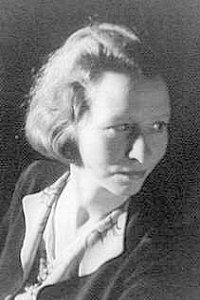
Edna St. Vincent Millay lived from 1892 to 1950. The poem has been on this site since February 2003. It was Poem of the Day on October 27, 2014. Readers commented on it here between 2004 and 2015.
What readers have said
j evans recited the poem in competitions and finds it inspiring despite its grief and poverty. The light, merry verses of mother and child are a delight amid the hardship. j evans, 2004
Jeanne Finn's family was very poor, and Jeanne's mother recited this poem at bedtime. Jeanne still recites it at night to relax and fall asleep. Jeanne Finn, 2004
Lorelei Stewart memorized it at school and takes from it a lesson about a mother's deep love. The mother gave everything to care for her child. Lorelei Stewart, 2010
Dwight felt the boy in the poem had the same life as Dwight's own. The poem is a reminder to stay humble whatever one achieves. Dwight, 2009
N. Wisniewski finds the poem so creepy it is laughable, reading the ending as eerie rather than moving. N. Wisniewski, 2006
Jay Lee uses an edited version in a piece of dark stage magic. The poem's macabre side reliably draws a reaction from audiences. Jay Lee, 2005
Keep reading
Discover more of Edna St. Vincent Millay’s poetry.
I used to recite this poem in competitions and at holiday banquets. Is it still recited widely. I picked it up at a high school forensics competition in the early 60's. Inspirational in spite of the grief and poverty; the lightness of the merry verses of the mother & child are delightful in the midst of strife. "Love conquers all!"
Jeanne FinnUnited States
We were very poor and my father had left my mother and us. She used to recite this poem when we were going to sleep. I still recite it in my mind at night. It helps to relax me and help me to sleep. Through the years I've forgotton some of the lines. Thank you for posting it on your website.
J PrineUnited States
This is a classic tale. Depressing in its simplistic description of a mother's love for her son. I see to it every new mother of a boy-child I know gets a copy.
n jimisonUnited States
Am so glad to find this poem.I forgot the Author and wanted to read it again .I first read it in English class years ago, I feel better now. Thank You
John R. GallupCanada
I discovered The Ballad Of The Harp-Weaver in my American Literature course in 1942-43. Our teacher, Miss Long, interpreted it well as she was a trained actress. Her students learned to love the poetry that she dramatically performed. I now still appreciate the mittens knitted for me by a poor neighbor lady who in this way paid me for shoveling snow off her sidewalls and carrying in coal for her little stove. Later in life I acquired the vinyl tape recording made by Edna St. Vincent Millay herself. The pathos of the poem has touched me through the years every time I hear it. How profoundly a motherly love can be manifested in the way she clothes her child.
MikeCanada
Johnny Cash did a touching recitation of it on Feb 24 1962 in a Louisiana Hayride broadcast and is on a CD called Johnny Cash Live Recordings from the Louisiana Hayride. I knew later he was a great folklorist but didn't know a poor Arkansas guitar picker would have the early depth he did.- I had never heard the Ballad of the Harp Weaver til I bought this CD and did this google search after. Somehow you just know when you have the real thing like this poem. It immediately grabbed me and would have grabbed even a rural listener/ on Scene Records 2003
Jay LeeUnited States
I learned of this poem from master magician and seance artist Eugene Burger's book, Spirit Theater, although I think he recites a slightly edited version of it. I am using it (EB's edit) in my own macabre piece of dark theatrical magic, as a segue into the dark sequence (when the lights go out and really weird stuff begins) It never seems to fail to get a reaction! Thanks Edna!
N. WisniewskiUnited States
I became familiar with this poem through forensics during the 70's. I often wondered what Ms. Millay was smoking when she wrote it. It is so creepy it makes me laugh.
Sherry Mannon ColeUnited States
I first read the poem many years ago in my senior English class. I had a wonderful teacher who inspired me and left a positive influence on my life. He had me read this poem as a read aloud to the student body of a small high school in northwest Arkansas. I have never forgotten the poem or him!
helo
im sure edna st vincent millay was NOT smoking anything when she wrote this poem. it is awesome!
Angela TirrellUnited States
i was first introduced to this poem by my English teacher when I was in tenth grade. The teacher is still very influential and I still haven't forgotten this poem!
777Belgium
I LOVE THIS POEM!!!!!!! YOU DEFINATELY HAVE TO READ IT!!!!!!! YOU'LL LOVE IT TO DEATH TOO!!!!!!!
I first heard this poem when I was in the third grade 1938 in Phila,Pa. When I was in the 6th grade our class had to learn this poem and I learned it all over night The next day I had to recite it in front of the class twice, the first time because i had stage fright and said it so fast, my teacher, made me do it all over again. I love this poem and have never forgot the verses. All my children the oldest, my daughter Maria Elena age 58 sent this link to me. My son Johnny who died in 1982 at the age of 28 loved me to recite this and act it out. My other two sons Mike and Martin and all my grand children,great-grand-children enjoy listening to me as i recite this favorite poem of mine.
DwightUnited States
The Ballad Of The Harp-Weaver
I first read this poem when I was in Jr. High School and it was at the direction of my English teacher. I loved the poem then and still have the original sheet that the teacher gave out. I think I linked with the poem because it was as if the young boy in the poem had the same life I did. No matter where I go in life and no matter what I accomplish this poem reminds me to be humble through it all.
DebUnited States
The Ballad of the Harp Weaver
I hand copied this poem from my 6th grade English book thirty nine years ago. I cried over it and decided to memorize it. From then on my mom would ask me to recite it for friends when they were over especially near the Christmas season. By the way, it still makes me tear up.
Lorelei StewartUnited States
The Ballad Of The Harp-Weaver
We memorized this poem in the 8th grade. I loved it. It always has stayed with me about a mother and her deep love for her child, and the fact that she gave all to take care of him. What a lesson to learn as a young child. I only hope that I can portray the same love to my children and then my grandchildren. I love the fact that my teacher loved this poem enough to share it with us.
cynthia l. kellyUnited States
poem found
I am so happy I finally found this poem! I have been searching for it for years and never knew the name of the author. I read it when I was ten years old and re read many times it until the book was lost. I have always loved this one!
Pat TysonUnited States
The Ballad od the Harp Weaver
My Mother told me this poem many years ago. I memorized for my 8th grade talent show and then did it for one of my daughter's talent shows in elementary school. It has always stayed with me through all these years. She also told me the poem "The House With Noboby in It. I do not know who wrote it.
Betty EichhornUnited States
My sister read this poem to me when I was about 10 years old. Act that time, we slept 2 or 3 to a bed, There were 11 children in our family and were not wealthy. I thought at that time , we were so lucky. We had warm clothes and enought to eat so we felt rich. my sister has been dead for 30 years as she died at the age 52. I cried I remember her reading this poem as if it were yesterday. for some reason today, I decided to try and find it. I thought the title was "" The Ballard of the Hearth Weaver. I have it saved so I can read it often. Thanks for the memory and this web site. My age is 73.
Marilyn AndersonUnited States
Memories
I remember we all had to memorize this poem in the 8th grade. I still remember all the words.
I used to recite this poem in competitions and at holiday banquets. Is it still recited widely. I picked it up at a high school forensics competition in the early 60's. Inspirational in spite of the grief and poverty; the lightness of the merry verses of the mother & child are delightful in the midst of strife.
"Love conquers all!"
We were very poor and my father had left my mother and us. She used to recite this poem when we were going to sleep. I still recite it in my mind at night. It helps to relax me and help me to sleep. Through the years I've forgotton some of the lines. Thank you for posting it on your website.
This is a classic tale. Depressing in its simplistic description of a mother's love for her son. I see to it every new mother of a boy-child I know gets a copy.
Am so glad to find this poem.I forgot the Author and
wanted to read it again .I first read it in English class years ago, I feel better now. Thank You
I discovered The Ballad Of The Harp-Weaver in my American Literature course in 1942-43. Our teacher, Miss Long, interpreted it well as she was a trained actress. Her students learned to love the poetry that she dramatically performed. I now still appreciate the mittens knitted for me by a poor neighbor lady who in this way paid me for shoveling snow off her sidewalls and carrying in coal for her little stove. Later in life I acquired the vinyl tape recording made by Edna St. Vincent Millay herself. The pathos of the poem has touched me through the years every time I hear it. How profoundly a motherly love can be manifested in the way she clothes her child.
Johnny Cash did a touching recitation of it on Feb 24 1962 in a Louisiana Hayride broadcast and is on a CD
called Johnny Cash Live Recordings from the Louisiana
Hayride. I knew later he was a great folklorist but didn't know a poor Arkansas guitar picker would have
the early depth he did.- I had never heard the Ballad
of the Harp Weaver til I bought this CD and did this google search after. Somehow you just know when you have the real thing like this poem. It immediately grabbed me and would have grabbed even a rural listener/ on Scene Records 2003
I learned of this poem from master magician and seance artist Eugene Burger's book, Spirit Theater, although I think he recites a slightly edited version of it. I am using it (EB's edit) in my own macabre piece of dark theatrical magic, as a segue into the dark sequence (when the lights go out and really weird stuff begins) It never seems to fail to get a reaction! Thanks Edna!
I became familiar with this poem through forensics during the 70's. I often wondered what Ms. Millay was smoking when she wrote it. It is so creepy it makes me laugh.
I first read the poem many years ago in my senior English class. I had a wonderful teacher who inspired me and left a positive influence on my life. He had me read this poem as a read aloud to the student body of a small high school in northwest Arkansas. I have never forgotten the poem or him!
im sure edna st vincent millay was NOT smoking anything when she wrote this poem.
it is awesome!
i was first introduced to this poem by my English teacher when I was in tenth grade. The teacher is still very influential and I still haven't forgotten this poem!
I LOVE THIS POEM!!!!!!! YOU DEFINATELY HAVE TO READ IT!!!!!!! YOU'LL LOVE IT TO DEATH TOO!!!!!!!
I first heard this poem when I was in the third grade 1938 in Phila,Pa. When I was in the 6th grade our class had to learn this poem and I learned it all over night The next day I had to recite it in front of the class twice, the first time because i had stage fright and said it so fast, my teacher, made me do it all over again. I love this poem and have never forgot the verses. All my children the oldest, my daughter Maria Elena age 58 sent this link to me. My son Johnny who died in 1982 at the age of 28 loved me to recite this and act it out. My other two sons Mike and Martin and all my grand children,great-grand-children enjoy listening to me as i recite this favorite poem of mine.
The Ballad Of The Harp-Weaver
I first read this poem when I was in Jr. High School and it was at the direction of my English teacher. I loved the poem then and still have the original sheet that the teacher gave out. I think I linked with the poem because it was as if the young boy in the poem had the same life I did. No matter where I go in life and no matter what I accomplish this poem reminds me to be humble through it all.
The Ballad of the Harp Weaver
I hand copied this poem from my 6th grade English book thirty nine years ago. I cried over it and decided to memorize it. From then on my mom would ask me to recite it for friends when they were over especially near the Christmas season. By the way, it still makes me tear up.
The Ballad Of The Harp-Weaver
We memorized this poem in the 8th grade. I loved it. It always has stayed with me about a mother and her deep love for her child, and the fact that she gave all to take care of him. What a lesson to learn as a young child. I only hope that I can portray the same love to my children and then my grandchildren. I love the fact that my teacher loved this poem enough to share it with us.
poem found
I am so happy I finally found this poem! I have been searching for it for years and never knew the name of the author. I read it when I was ten years old and re read many times it until the book was lost. I have always loved this one!
The Ballad od the Harp Weaver
My Mother told me this poem many years ago. I memorized for my 8th grade talent show and then did it for one of my daughter's talent shows in elementary school. It has always stayed with me through all these years. She also told me the poem "The House With Noboby in It. I do not know who wrote it.
My sister read this poem to me when I was about 10 years old. Act that time, we slept 2 or 3 to a bed, There were 11 children in our family and were not wealthy. I thought at that time , we were so lucky. We had warm clothes and enought to eat so we felt rich. my sister has been dead for 30 years as she died at the age 52. I cried I remember her reading this poem as if it were yesterday. for some reason today, I decided to try and find it. I thought the title was "" The Ballard of the Hearth Weaver. I have it saved so I can read it often. Thanks for the memory and this web site. My age is 73.
Memories
I remember we all had to memorize this poem in the 8th grade. I still remember all the words.