Fear of seeing a police car pull into the drive.
Fear of falling asleep at night.
Fear of not falling asleep.
Fear of the past rising up.
Fear of the present taking flight.
Fear of the telephone that rings in the dead of night.
Fear of electrical storms.
Fear of the cleaning woman who has a spot on her cheek!
Fear of dogs I've been told won't bite.
Fear of anxiety!
Fear of having to identify the body of a dead friend.
Fear of running out of money.
Fear of having too much, though people will not believe this.
Fear of psychological profiles.
Fear of being late and fear of arriving before anyone else.
Fear of my children's handwriting on envelopes.
Fear they'll die before I do, and I'll feel guilty.
Fear of having to live with my mother in her old age, and mine.
Fear of confusion.
Fear this day will end on an unhappy note.
Fear of waking up to find you gone.
Fear of not loving and fear of not loving enough.
Fear that what I love will prove lethal to those I love.
Fear of death.
Fear of living too long.
Fear of death.
I've said that.
✦
Analysis
Fear: analysis
Introduction
"Fear" is a list poem. Twenty-six of its lines begin with the word "Fear," and each one names something the speaker dreads. The fears run from the small, such as "electrical storms," to the grave, such as having "to identify the body of a dead friend."
They touch on sleep, money, family, love and death. A one-line second stanza closes the poem: "I've said that." The poem is about a mind that cannot stop listing what it dreads. It also shows how fear can turn back on itself.
Summary
The poem opens with fears set down one to a line. The first is of "a police car" pulling into the drive. The speaker fears falling asleep at night, and also not falling asleep. The past may rise up, and the present may take flight. A telephone may ring "in the dead of night," and there are electrical storms.
Some fears are small and oddly exact. One is of "the cleaning woman who has a spot on her cheek," ending with an exclamation point. Another is of dogs the speaker has been told will not bite. Then comes "Fear of anxiety!" with a second exclamation point.
Graver and more social fears follow. The speaker fears having to identify a dead friend's body. The speaker fears running out of money, and also having too much, which people will not believe. The list adds psychological profiles, being late and arriving before anyone else.
The fears turn to family. The speaker dreads "my children's handwriting on envelopes." The speaker fears the children will die first, leaving the speaker guilty. Another fear is of living with the speaker's mother "in her old age, and mine." Confusion comes next, and the fear that the day will end "on an unhappy note."
The last fears of the first stanza concern love and death. The speaker fears waking up "to find you gone." The speaker fears not loving, and not loving enough. The speaker fears that "what I love will prove lethal to those I love." The list closes with death, living too long, and death again.
The second stanza is one short line: "I've said that." The speaker notes that the fear of death has already been named. Nothing follows it, and the poem ends on this remark.
Themes and meaning
The first theme is fear that feeds on itself. Line 10 names "Fear of anxiety!" which is a fear of fear. Many fears come in opposed pairs: sleep and sleeplessness in lines 2 and 3, too little money and too much in lines 12 and 13. Line 15 fears both lateness and arriving early, so there seems to be no safe position to take.
A second theme is love and family. Lines 16 to 18 move through the speaker's children and mother, and even "my children's handwriting on envelopes" becomes a threat. Line 23 fears "that what I love will prove lethal to those I love." The poem does not say what that thing is. It can be read as a habit or a way of life that harms the people close to the speaker.
A third theme is death and time. Line 4 fears "the past rising up," and line 5 fears "the present taking flight." Death appears in lines 11, 17, 24 and 26. "Fear of living too long" sits between the two lines that name death. The speaker dreads both an early end and a long life.
A fourth theme is the mixing of the trivial and the grave. The cleaning woman's spot sits a few lines from a dead friend's body. Each fear gets one line, so none is ranked above another. This flat treatment can be read as a picture of anxiety, which does not sort worries by size. It also gives the list an honest, unguarded quality, as in the aside "though people will not believe this."
Tone
The tone is plain, confessional and steady. The repeated "Fear of" gives the voice a flat, almost numb rhythm. The speaker does not explain or argue. Each dread is simply stated and left.
Two exclamation points break the flatness, at lines 8 and 10. They can be read as sudden alarm, or as the speaker mocking an odd fear. The aside in line 13 sounds defensive, as if expecting disbelief. The words "and mine" in line 18 add a dry awareness of the speaker's own ageing.
The tone deepens near the end. Lines 21 to 23 address "you" and speak of love, which makes them more intimate. The last line, "I've said that," is dry and self-correcting. It can be heard as weary, as wry, or as the mind catching itself repeating its worst fear.
Form and structure
The poem has 27 lines in 2 stanzas of 26 lines and 1 line. It is free verse with no metre. Lines range from 3 to 17 syllables. Every line of the first stanza begins with "Fear," and nearly every one is a sentence fragment without a main verb.
There is no rhyme scheme. A few line endings echo by chance or design: "night" in lines 2 and 6, "flight" in line 5 and "bite" in line 9. "Fear of death" repeats exactly in lines 24 and 26. Each line is end-stopped, so the list moves in separate, equal steps. The short second stanza stands apart and comments on the first.
Poetic devices
Anaphora line 1
Fear of seeing a police car pull into the drive Every line of the first stanza begins with "Fear." The repetition builds a steady, relentless list and makes each new dread feel like one more of many.
Antithesis line 15
Fear of being late and fear of arriving before anyone else The line fears two opposite outcomes at once. It shows a worry that no choice can satisfy.
Personification line 4
Fear of the past rising up The past is pictured as something that can stand up and return. It suggests old events or actions that the speaker would rather keep buried.
Metaphor line 5
Fear of the present taking flight The present is pictured as something that can fly away. Set beside line 4, it shows the speaker squeezed between a returning past and a vanishing present.
Idiom with double sense line 6
in the dead of night The phrase means the middle of the night. The word "dead" can also be heard as a hint of the bad news such a call might bring.
Exclamation line 8
Fear of the cleaning woman who has a spot on her cheek! One of only two exclamation points in the poem. It singles out a small, oddly specific fear and makes it stand out from the flat list.
Repetition line 23
Fear that what I love will prove lethal to those I love The word "love" appears twice, for two different objects. The line sets something the speaker loves against the people the speaker loves.
Irony line 18
in her old age, and mine The speaker adds a short afterthought. It admits that the speaker will also be old, which makes the fear partly a fear about the self.
Repetition line 26
Fear of death. The line repeats line 24 word for word. The return of this fear shows it is the one the list keeps coming back to.
Understatement line 27
I've said that. The final line notices the repetition in a plain, offhand way. The short remark after the long list can read as weary or as quietly comic.
Words worth knowing
psychological profiles
Written assessments of a person's character and mental state, of the kind made by doctors or investigators.
identify
Here, the formal act of confirming who a dead person is by viewing the body.
lethal
Deadly; able to cause death.
Context
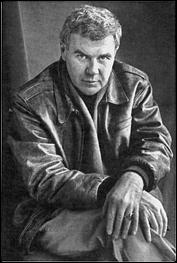
Raymond Carver lived from 1938 to 1988. "Fear" has been on americanpoems.com since 2004. Readers left 9 comments on it between 2004 and 2020.
What readers have said
Karen M. Wagner reads the poem as a constant, minute-by-minute struggle with fear, and finds the repetition to be its driving force. Karen M. Wagner, 2004
Juan Hincapié singles out the final line, saying it struck like a punch. Juan Hincapié, 2004
paolo reads the poem as being about a black hole at whose edge everyone walks. This reader says it is what makes people drink and writers write. paolo, 2005
Brittni, who says Carver was a great-uncle, reads the poem as a true record of what he was thinking about death. Brittni, 2004
joel relates the poem to personal fears of having the unhappy past brought up and of taking small chances. joel, 2004
sarah asks why only two lines use exclamation points, a question the poem leaves open. sarah, 2020
Ray Was my great uncle, I didn't know him well, for he died 16 days before I was born. I believe that this poem, although repetitive, shows really what he was thinking, anyone who has had to go though death, whether scared or not, has got to have some kind of thought prosses on the subject. This, I believe was his. I love Ray's work, it is my insperation for my own poetry.
Karen M. WagnerUnited States
I believe this poem is full of insight into the authors attempt to live with the constant struggle of facing fear on a minute by minute basis every single day. I found it's repetativeness to be enlightening and fearless and to be the driving force of eash word that followed. I enjoyed it's "in your face" approach with nothing hidden.
Juan HincapiéColombia
Fear of commenting this masterpiece; wouldn't dare, master. (However, the final sentence punched me in the face; Carver's greatness echoes here too —and its loud).
joelUnited States
I think that this poem relates to me alot. Cause I am afriad when people want to bring up things from the past that I am not very happy about. Cause I am afriad to take small chances that everybody take.
harley nyckoleUnited States
this poem is very inspiring ...it really touched me ..
chiaraUnited Kingdom
Honest and simple.Just the truth.That's what we'r maid of,that's what make our life worthing.But it's amazing how our body can get uset to avery thing.
paoloItaly
This poem is about the black hole, the one on the edge of which all of us are force to walk. It makes humans drink, writers write, him, both to the deepest length.
Storm
I, on March 2, 2005, too wrote a poem called fear. I wrote the poem for my 7th Grade English class and every one that read it said it was great so ya. I came across your poem searching for my poem on google. I alway thought it would be cool to come up on google (that's how I am cause I'm 13 years old). Any way I think since we are both poets (in the sence that we both write poetry) I figured that I would share my poem with you. Any way here it is.
Fear crawls into the room with envy and worry Together they over come me, suffocate me, smother me They dig my grave, condemn me with ever lasting hatered and spite They eat me alive
sarah
is there a specific reason why only two lines used exclamation points?
Ray Was my great uncle, I didn't know him well, for he died 16 days before I was born. I believe that this poem, although repetitive, shows really what he was thinking, anyone who has had to go though death, whether scared or not, has got to have some kind of thought prosses on the subject. This, I believe was his.
I love Ray's work, it is my insperation for my own poetry.
I believe this poem is full of insight into the authors attempt to live with the constant struggle of facing fear on a minute by minute basis every single day. I found it's repetativeness to be enlightening and fearless and to be the driving force of eash word that followed. I enjoyed it's "in your face" approach with nothing hidden.
Fear of commenting this masterpiece; wouldn't dare, master. (However, the final sentence punched me in the face; Carver's greatness echoes here too —and its loud).
I think that this poem relates to me alot. Cause I am afriad when people want to bring up things from the past that I am not very happy about. Cause I am afriad to take small chances that everybody take.
this poem is very inspiring ...it really touched me ..
Honest and simple.Just the truth.That's what we'r maid of,that's what make our life worthing.But it's amazing how our body can get uset to avery thing.
This poem is about the black hole, the one on the edge of which all of us are force to walk. It makes humans drink, writers write, him, both to the deepest length.
I, on March 2, 2005, too wrote a poem called fear. I wrote the poem for my 7th Grade English class and every one that read it said it was great so ya. I came across your poem searching for my poem on google. I alway thought it would be cool to come up on google (that's how I am cause I'm 13 years old). Any way I think since we are both poets (in the sence that we both write poetry) I figured that I would share my poem with you. Any way here it is.
Fear crawls into the room with envy and worry
Together they over come me, suffocate me, smother me
They dig my grave, condemn me with ever lasting hatered and spite
They eat me alive
is there a specific reason why only two lines used exclamation points?