I AM the nigger.
Singer of songs,
Dancer. . .
Softer than fluff of cotton. . .
Harder than dark earth
Roads beaten in the sun
By the bare feet of slaves. . .
Foam of teeth. . . breaking crash of laughter. . .
Red love of the blood of woman,
White love of the tumbling pickaninnies. . .
Lazy love of the banjo thrum. . .
Sweated and driven for the harvest-wage,
Loud laugher with hands like hams,
Fists toughened on the handles,
Smiling the slumber dreams of old jungles,
Crazy as the sun and dew and dripping, heaving life
of the jungle,
Brooding and muttering with memories of shackles:
I am the nigger.
Look at me.
I am the nigger.
✦
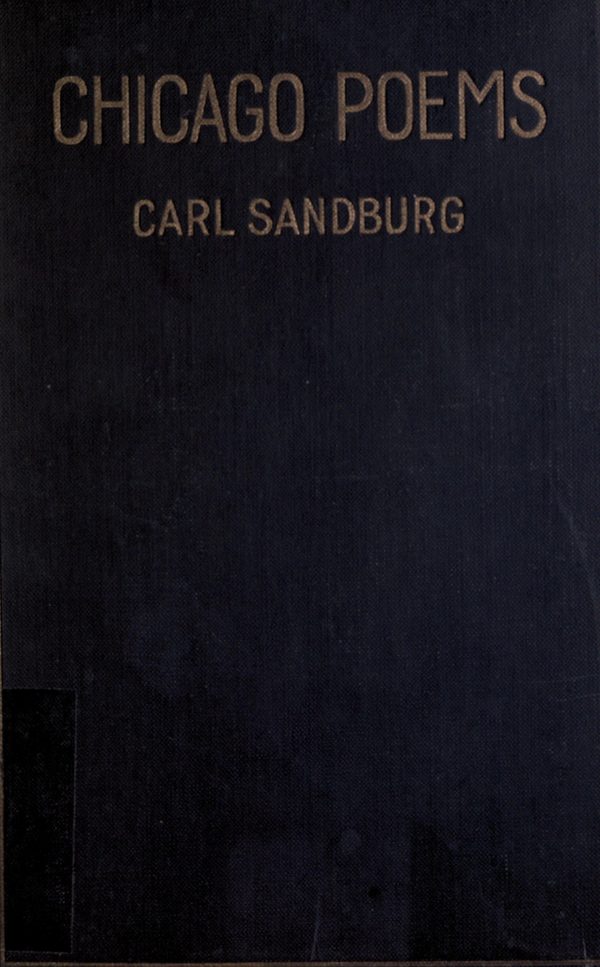
From the bookChicago PoemsFirst edition, Henry Holt, 1916
Analysis
Nigger: analysis
Introduction
This poem's title and refrain is a racial slur against Black people. The poem is a monologue in an invented Black speaker's voice. He opens by giving the slur as his name, and repeats it twice at the close.
Between those lines he describes himself in a list of images. Some recall slavery, forced labour and the memory of shackles. Many others are racist stereotypes: the singer, the dancer, the laughing, lazy banjo player, dreams of "old jungles". The poem ends with a demand: "Look at me." It has long divided readers.
Summary
Line 1 states the speaker's identity, using the slur: "I AM the nigger." Lines 2–3 describe him as a "Singer of songs" and a "Dancer". Each of these is a fragment, with no verb.
Lines 4–7 set softness against hardness. He is "Softer than fluff of cotton". He is "Harder than dark earth", the earth of roads "beaten in the sun" by "the bare feet of slaves".
Lines 8–11 list his pleasures and loves. There is "Foam of teeth" and a "breaking crash of laughter". There is "Red love of the blood of woman" and "White love" of children, named with a second slur. Line 11 adds "Lazy love of the banjo thrum".
Lines 12–14 turn to work. He is "Sweated and driven for the harvest-wage". He is a "Loud laugher with hands like hams", with "Fists toughened on the handles" of tools.
Lines 15–18 turn inward. He smiles "the slumber dreams of old jungles". He is "Crazy as the sun and dew and dripping, heaving life / of the jungle". Finally he is "Brooding and muttering with memories of shackles".
Lines 19–21 repeat the opening statement. Between its two repetitions stands a command to the reader: "Look at me." The poem ends on the slur, as it began.
Themes and meaning
The poem is centrally about naming. The speaker takes the slur as his own name, first and last. This can be read as defiance, facing the reader with the word used against him. It can also be read as the poem fixing him in that word, since it offers him no other name.
Slavery and its memory form a second theme. The roads are beaten "By the bare feet of slaves". The speaker broods on "memories of shackles". Line 12 extends this into paid but driven labour. These lines treat oppression as part of who he is.
The portrait leans heavily on stereotypes. Singing, dancing, laughter, laziness, the banjo and the "jungle" were all standard features of racist caricature. "hands like hams" and the term for the children belong to the same stock. The poem presents these traits as warm and vital. It does not question them.
Visibility is a fourth theme. "Look at me" demands attention. The speaker insists on being seen, and the whole poem is a display of himself to an onlooker. Who does the looking, and through whose eyes, is the poem's unresolved problem.
This tension drives readers' disagreement. Some see sympathy, even celebration, from a poet speaking for the oppressed. Others see a speaker invented from outside, built from caricature and handed a slur for his name. The text gives support to both. It names slavery plainly while repeating the stereotypes that justified it.
Tone
The tone is declarative and incantatory. The flat statement in line 1 is repeated without change. The ellipses create a slow, musing rhythm.
In lines 8–11 the tone turns sensual and exuberant, full of laughter and love. This warmth is also where the caricature is heaviest. Lines 12–14 then become harder and more physical, and "Sweated and driven" introduces strain.
From line 15 the mood darkens into dream and then resentment. "Brooding and muttering" suggests anger held back. The close is confrontational. "Look at me" is a challenge, not a plea. Whether the voice sounds proud or imposed depends on how the reader takes the persona.
Form and structure
The poem has 21 lines in 1 stanza. It is free verse with no rhyme and no regular metre. Lines range from 2 to 13 syllables, and line 17 completes line 16.
Most of the poem is a list of noun phrases and descriptions attached to "I". There are few main verbs. The speaker defines himself by piling up images rather than by telling a story.
The spaced ellipses in lines 3–11 slow the pace and leave gaps between images. The refrain frames the list, appearing in line 1, line 19 and line 21. "Look at me." stands alone as line 20.
Poetic devices
Refrain line 19
I am the nigger. The opening line returns twice at the close. The repetition fixes the slur as the speaker's identity and frames every image between.
Ellipsis line 3
Dancer. . . The trailing dots leave each image hanging. They slow the list and make it sound musing and loose.
Antithesis line 4
Softer than fluff of cotton Softness is set against the hardness of line 5. Cotton also points to the crop worked by enslaved people.
Imagery line 7
By the bare feet of slaves A concrete picture of enslaved people's labour. The hard road carries the history of slavery into the speaker's body.
Metaphor line 8
Foam of teeth White teeth become foam, like a breaking wave. The image belongs to the grinning caricature the poem repeats.
Colour contrast line 10
White love It follows 'Red love' in line 9. The colours sort the speaker's loves into passion and tenderness.
Onomatopoeia line 11
banjo thrum 'Thrum' imitates strummed strings. It is paired with 'Lazy', a stock racist trait.
Simile line 13
hands like hams The hands are huge and meaty. The comparison stresses brute strength and reduces the body to a caricature.
Stereotype line 15
the slumber dreams of old jungles The speaker is tied to an imagined jungle past. This primitivist image was common in racist writing.
Alliteration line 18
muttering with memories The repeated 'm' sounds give a low, grumbling sound to the speaker's resentment of slavery.
Direct address line 20
Look at me. The speaker turns to the reader with a command. It forces the reader to take up the position of onlooker.
Words worth knowing
pickaninnies
A derogatory term for Black children, itself a slur. It is not a neutral word for children.
thrum
The steady sound of strings being strummed.
harvest-wage
The pay earned for farm work at harvest time, often hard seasonal labour.
hams
Pork thighs, cured as meat. 'Hands like hams' means very large, thick hands.
shackles
Metal fetters for the wrists or ankles, used on enslaved people.
beaten
Here, trodden hard by many feet, as a path is. It also suggests beatings.
Context
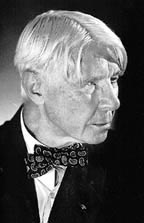
Carl Sandburg lived from 1878 to 1967. The archive lists the poem as number 43 in his collection Chicago Poems, published in 1916. It has been on americanpoems.com since February 2004. It was Poem of the Day on 20 December 2009. Readers left 41 comments on it between 2004 and 2022, many arguing over whether it is racist.
What readers have said
Black Queen, who is Black, finds the poem deeply offensive and calls it a racist statement that should not have been published. Black Queen, 2004
Samsarai argues the poet would not degrade anyone with a slur, and reads him as pushing back against the prejudice and hypocrisy of his generation. Samsarai, 2004
Jessica L thinks the poem matches the name to the stereotype, drawing on what little the poet knew of Black people. and calls him a man of his time, not to be revered but not hated. Jessica L, 2005
TjB reads the speaker as a proud, strong man searching for identity, dreaming of a lost homeland and remembering the shackles with spite. TjB, 2006
Anna asks why the poet used the word at all, since he knew it was used against Black people as a racial insult. Anna, 2007
Asante' Lake says family members were lynched in the year the poem was published, and argues that no white man then could have been immune to the racism around him. Asante’ Lake, 2020
Hey...this poem was not a poem to be published I take it very offensive...not onlly because i am black...because it is a rascist statement in general! wonder if i wrote a poem about His race cough cough! His family needs to get rid of this or the panthers are coming after you!!! black panthers that be! i am black look at me, have you ever seen anything as sexy as we after al we be the queen of all kissing!!! "JUICY LIPS" HOLLA AT CHA QUEEN! 1
This poem isn't some racial tool of degradation. Black Queen, what you posted was incredibly ignorant. Sandburg was a sympathizer, not a slave driver. Learn something before you make anymore naive posts.
MAGLEDONUnited States
You have all put Carl Sandburg on the pedastal he deserves with your shallow comments. He is far beyond us. Read the poem, think, breathe and carry on with your life. Thats what I plan to do now.
SamsaraiUnited States
If you think Carl Sandburg is base enough to mire his euphuism just to regard any human with the degradation of a name-branding slur then I would suggest you read "the man with the broken fingers."
Carl Sandburg was a man who pushed the limits of his time and shoved the absurdities of his generations prejudice and hypocrisy back into the faces of those who chose to limit and belittle the human spirit regardless of race.
HeatherUnited States
i liked the poem not only because of the words but i also liked the title!!!!! ROCK ON!!!!!!
yo black queen, i too thought this poem was descriminating against us, but i read so many times that i see what da brothers pointin out. Read it again dawg and ill's let yous figure it out. peace.
michelleUnited States
this poem is not racist and those who disagree would have no clue because that would mean you have no comprehension of what his poem is trying to point out.
lequisha ladishaJamaica
as a nagger i have only one thing to say....this shisnit is de bomb..."I AM THE NAGGER" ...hel yea...this powem is a true resemblance to the physical properties of a nagger...
KKKUnited States
This poem is awesome. It really reflects my views.
I never read this poet's work before happening on this estimable website. I sought out his poem first because of it's stark title which inevitably catches one's eye in this day and age. Does anyone remember John Lennon (never thought racist I trust)using the "n" word about his ancestral Irish kith and kin in a song. He used this in context of the hateful original use of the word to link what was also meted out to…
Read the whole comment
I never read this poet's work before happening on this estimable website. I sought out his poem first because of it's stark title which inevitably catches one's eye in this day and age. Does anyone remember John Lennon (never thought racist I trust)using the "n" word about his ancestral Irish kith and kin in a song. He used this in context of the hateful original use of the word to link what was also meted out to his own folk in Britain. Sandburg was identifying with not disparaging black people, it is poor judgement if anyone thinks otherwise. This is surely a praiseworthy evocation of the worthiness of all people not to be treated as badly as our ancestors did the slaves of past history. And as a paleface ,or must I say, "white person" I think he touched on a shameful past in a good way in a good poem I hope and know black men and women can appreciate, as illustrated by comments I have read on site. Thanks USA for this opportunity for an old Englishman to contribute. Frank E Gibbard.
Don McKee
The other comments suggest the reflective quality of this powerful poem. it is a mirror in which we see ourselves.
Comming from Australia and livimg in the country I know alot of black people and I'm only 13 so heaps of the kids at school are aboriginals. This poem is moving and I can really relate to what Carl is saying because when you get to know these people as well as I do you see that this poem is egsactially like our natives are "as soft as cotton" Thanx 2 this poem I'm hell into poetry best thing I've ever read congrats keep it up
this poem does not segregate the black from all others. It celebrates the people, it does not purposely offend people of diffrent beliefs and it should not be seen as a statement of supperiority. So once again like many others black queen, you may be black, white, blue or green and find it offensive. But find a reason to be offened other then it's controversial tilte.
i did a little history on Carl after reading this poem. It turns out that what little he knew and saw of black people, he showed in the poem. He was not unbias. as a reporter he smudged facts in favor of the "system". However, i feel that in this poem, he is trying to match the name with the steryotype. he cannot understand why these beautiful things are given such an ugly name. he was a man of his time. no to be reveared but not to be hated.
DeniseUnited States
This poem is pure genius. If you did not think so, try reading it again. Sandburg's intelligence is unlimited.
Many of you are taking his poem out of context. He is simply making an observation of the man utilizing the terminology of the day. In retrospect being a thinking people without racial sterotypes or hatred, we can look at it as it was intended.... An "in camera" observation by one of the great poets of the time period. My race happens to be from Europe (white), but we are all just men and women, not black and white men and women.... All human.
AshleyUnited States
I think that this is wrong cause u can get in trouble for RACISM!!! So,NEVER EVER send me ne more of this crap! GOOD BYE
This is a brilliant poem. It is filled with depth and emotion. It shows the black man the way Sandburg saw him: lively, strong, and always searching. In Snadburg's poem, the black man dreams of jungles, and remembers the shackles with spitefulness. He is a man trying to find identity (longing for the return to his native land). He is a fighter and a lover. Sandburg saw a man who was proud.
Luke VajUnited States
This poem describes a lot about the era that Carl was from. Reread the poem to understand its full content, for it does describe what Carl saw. Now time has changed , but history will always be with us. We cannot change the past but we can make a difference for the future.
lalapalloosaEgypt
This poem is just trying to tell u that blacks are bad, AND I THINK THAT IS BULLSHIT
yo mamaUnited States
wat up with the? im the best rapper in my hood, how about u g-dawg wannabe?
This poem is so racist!!!!!! wat a wigger carl sandburg was!!!! he thinks he is black!!!! White people need to stop trying to be black, They put us through slavery and dis us. and then they wanna be like us. ???????? what the hell???
At first glance, it is simple to see why people are so offended by this poem. But it is such a wrong interpretation! For lallapalloosa and coolio dawg - Carl Sandburg is not black, nor does he think he is! You completely lost the point, saw it out of context. Absorb the poem. Sandburg is celebrating a rich history and flavorful vocabulary. He is not using derogatory phrases he is celebrating not only a race but a…
Read the whole comment
At first glance, it is simple to see why people are so offended by this poem. But it is such a wrong interpretation! For lallapalloosa and coolio dawg - Carl Sandburg is not black, nor does he think he is! You completely lost the point, saw it out of context. Absorb the poem. Sandburg is celebrating a rich history and flavorful vocabulary. He is not using derogatory phrases he is celebrating not only a race but a people. Not just black people, but all people. He is even featuring himself inside the poem. He is comparing himself to an outsider and celebrating the beauty of the difference. It is completely ignorant when people think he is trying to be black or degrading a black man - and frankly, I think it shows alot of insecurity to think that! Everything in the world isn't black or white. And he is portraying exactly that in this rich and beautiful context.
annoyed
so childish every1 is the same it does not matter the colour of skin!!!!!!
I like this poem because he put him self in other shoes. He also described in a little details of a black person. He also not only did that but showed sort of the strength of a black person.
AnnaUnited States
i want to know why did he used this word. he knew this word used toward blacks in a racial way.
Are you people idiots? If you think this poem is derogatory in the least you need to take an english class. Put your "40" down and listen. This is a beautiful poem about how Sandburg felt towards the African American people. HE FELT SORRY FOR THE WAY THE WHITES TREATED THEM!!!!!!!!! So "coolio" or "homie g dawg" how about read a poem and understand it before leaving a racist comment about beating up a brilliant poet that's been dead for years.
abby
i agree with comment #39 its a bad word used in a very bad way hes so racist
i love this poem too...because it is amazing i swear i love black people...is this guy black??...i am black
brad waltonUnited States
dumbasses
you dumba**es need to get a real job instead of reading poems like do construction and work with big hard throbbing piecies of wood!!!!!!!!!!!!!!
Lil GeniusUnited States
Oh wow. People are just...wow. I love this poem, not only because its written amazingly, but because it caught my attention. so EVERYONE needs to chill, its just a poem, dont be stupid about it. its only racist if YOU make it that way. so leave it alone. ~Have A Nicce Life!
This poem published in 1916, the same year 5 men in my family were lynched, hung from the same tree limb. No one was ever convicted of this horrific murder. Years later all the men were exonerated, found innocent. When this poem was written racism was a taken-for-granted reality in an America that was built on a solid pillar of racism. To suggest that Carl Sandburg was NOT racist is to suggest he was immune to the…
Read the whole comment
This poem published in 1916, the same year 5 men in my family were lynched, hung from the same tree limb. No one was ever convicted of this horrific murder. Years later all the men were exonerated, found innocent.
When this poem was written racism was a taken-for-granted reality in an America that was built on a solid pillar of racism. To suggest that Carl Sandburg was NOT racist is to suggest he was immune to the pervasive racism he was immersed in as a white man. He would have had to be raised in isolation, in a cave. To recognize the extreme differences in the experiences of black people from his own means he recognized the racial differences. He did not, could not write from his own experiences, otherwise he would have written about the white male privilege that afforded him the advantages he had, and the opportunity to write and publish as a poet in America.
Did you also love "Jungheimer's" and " 'Boes"? I especially liked "Ready to Kill" because it reminded me of the "good ole boys of the South and their Confederate so-called heroic statues everywhere. But then white-washed American history often salutes the defeated as in the statue at Bull Run of Custer.
Hey...this poem was not a poem to be published I take it very offensive...not onlly because i am black...because it is a rascist statement in general! wonder if i wrote a poem about His race cough cough! His family needs to get rid of this or the panthers are coming after you!!! black panthers that be! i am black look at me, have you ever seen anything as sexy as we after al we be the queen of all kissing!!! "JUICY LIPS" HOLLA AT CHA QUEEN! 1
This poem isn't some racial tool of degradation. Black Queen, what you posted was incredibly ignorant. Sandburg was a sympathizer, not a slave driver. Learn something before you make anymore naive posts.
You have all put Carl Sandburg on the pedastal he deserves with your shallow comments. He is far beyond us. Read the poem, think, breathe and carry on with your life. Thats what I plan to do now.
If you think Carl Sandburg is base enough to mire his euphuism just to regard any human with the degradation of a name-branding slur then I would suggest you read "the man with the broken fingers."
Carl Sandburg was a man who pushed the limits of his time and shoved the absurdities of his generations prejudice and hypocrisy back into the faces of those who chose to limit and belittle the human spirit regardless of race.
i liked the poem not only because of the words but i also liked the title!!!!! ROCK ON!!!!!!
yo black queen, i too thought this poem was descriminating against us, but i read so many times that i see what da brothers pointin out. Read it again dawg and ill's let yous figure it out.
peace.
this poem is not racist and those who disagree would have no clue because that would mean you have no comprehension of what his poem is trying to point out.
as a nagger i have only one thing to say....this shisnit is de bomb..."I AM THE NAGGER" ...hel yea...this powem is a true resemblance to the physical properties of a nagger...
This poem is awesome. It really reflects my views.
I never read this poet's work before happening on this estimable website. I sought out his poem first because of it's stark title which inevitably catches one's eye in this day and age. Does anyone remember John Lennon (never thought racist I trust)using the "n" word about his ancestral Irish kith and kin in a song. He used this in context of the hateful original use of the word to link what was also meted out to…
Read the whole commentI never read this poet's work before happening on this estimable website. I sought out his poem first because of it's stark title which inevitably catches one's eye in this day and age. Does anyone remember John Lennon (never thought racist I trust)using the "n" word about his ancestral Irish kith and kin in a song. He used this in context of the hateful original use of the word to link what was also meted out to his own folk in Britain. Sandburg was identifying with not disparaging black people, it is poor judgement if anyone thinks otherwise. This is surely a praiseworthy evocation of the worthiness of all people not to be treated as badly as our ancestors did the slaves of past history. And as a paleface ,or must I say, "white person" I think he touched on a shameful past in a good way in a good poem I hope and know black men and women can appreciate, as illustrated by comments I have read on site. Thanks USA for this opportunity for an old Englishman to contribute. Frank E Gibbard.
The other comments suggest the reflective quality of this powerful poem. it is a mirror in which we see ourselves.
Comming from Australia and livimg in the country I know alot of black people and I'm only 13 so heaps of the kids at school are aboriginals. This poem is moving and I can really relate to what Carl is saying because when you get to know these people as well as I do you see that this poem is egsactially like our natives are "as soft as cotton" Thanx 2 this poem I'm hell into poetry best thing I've ever read congrats keep it up
this poem does not segregate the black from all others. It celebrates the people, it does not purposely offend people of diffrent beliefs and it should not be seen as a statement of supperiority.
So once again like many others black queen, you may be black, white, blue or green and find it offensive. But find a reason to be offened other then it's controversial tilte.
i did a little history on Carl after reading this poem. It turns out that what little he knew and saw of black people, he showed in the poem. He was not unbias. as a reporter he smudged facts in favor of the "system". However, i feel that in this poem, he is trying to match the name with the steryotype. he cannot understand why these beautiful things are given such an ugly name. he was a man of his time. no to be reveared but not to be hated.
This poem is pure genius. If you did not think so, try reading it again. Sandburg's intelligence is unlimited.
Many of you are taking his poem out of context. He is simply making an observation of the man utilizing the terminology of the day. In retrospect being a thinking people without racial sterotypes or hatred, we can look at it as it was intended.... An "in camera" observation by one of the great poets of the time period. My race happens to be from Europe (white), but we are all just men and women, not black and white men and women.... All human.
I think that this is wrong cause u can get in trouble for RACISM!!!
So,NEVER EVER send me ne more of this crap!
GOOD BYE
Carl Sandburg is WHITE! Damn white boys trying to be black....
This is a brilliant poem. It is filled with depth and emotion. It shows the black man the way Sandburg saw him: lively, strong, and always searching. In Snadburg's poem, the black man dreams of jungles, and remembers the shackles with spitefulness. He is a man trying to find identity (longing for the return to his native land). He is a fighter and a lover. Sandburg saw a man who was proud.
This poem describes a lot about the era that Carl was from. Reread the poem to understand its full content, for it does describe what Carl saw. Now time has changed , but history will always be with us. We cannot change the past but we can make a difference for the future.
This poem is just trying to tell u that blacks are bad, AND I THINK THAT IS BULLSHIT
wat up with the? im the best rapper in my hood, how about u g-dawg wannabe?
This poem is so racist!!!!!! wat a wigger carl sandburg was!!!! he thinks he is black!!!! White people need to stop trying to be black, They put us through slavery and dis us. and then they wanna be like us. ???????? what the hell???
At first glance, it is simple to see why people are so offended by this poem. But it is such a wrong interpretation! For lallapalloosa and coolio dawg - Carl Sandburg is not black, nor does he think he is! You completely lost the point, saw it out of context. Absorb the poem. Sandburg is celebrating a rich history and flavorful vocabulary. He is not using derogatory phrases he is celebrating not only a race but a…
Read the whole commentAt first glance, it is simple to see why people are so offended by this poem. But it is such a wrong interpretation! For lallapalloosa and coolio dawg - Carl Sandburg is not black, nor does he think he is! You completely lost the point, saw it out of context. Absorb the poem. Sandburg is celebrating a rich history and flavorful vocabulary. He is not using derogatory phrases he is celebrating not only a race but a people. Not just black people, but all people. He is even featuring himself inside the poem. He is comparing himself to an outsider and celebrating the beauty of the difference. It is completely ignorant when people think he is trying to be black or degrading a black man - and frankly, I think it shows alot of insecurity to think that! Everything in the world isn't black or white. And he is portraying exactly that in this rich and beautiful context.
so childish every1 is the same it does not matter the colour of skin!!!!!!
Hey, this poem is really bad, he should'nt be dis'in black peeps whoever put their name as kkk can go to *!!@@. Jack-****
Wow this is a very cute poem about blacks
i really like poems because it can relate to us arfrican americans. I has a way of telling how you feel too!!
I like this poem because he put him self in other shoes. He also described in a little details of a black person. He also not only did that but showed sort of the strength of a black person.
i want to know why did he used this word. he knew this word used toward blacks in a racial way.
This poem is bad..for back in the days but not its just funny to see a white men worry about the black man! he betta get gone! forreal
Wow. I can't tell if you people are joking or you're just uneducated. If you understand the time period you'll understand the poem.
Are you people idiots? If you think this poem is derogatory in the least you need to take an english class. Put your "40" down and listen. This is a beautiful poem about how Sandburg felt towards the African American people. HE FELT SORRY FOR THE WAY THE WHITES TREATED THEM!!!!!!!!! So "coolio" or "homie g dawg" how about read a poem and understand it before leaving a racist comment about beating up a brilliant poet that's been dead for years.
i agree with comment #39 its a bad word used in a very bad way hes so racist
I love this poem!!
PIECE OF ****!!!!!!!!!!!
i love this poem too...because it is amazing i swear i love black people...is this guy black??...i am black
dumbasses
you dumba**es need to get a real job instead of reading poems like do construction and work with big hard throbbing piecies of wood!!!!!!!!!!!!!!
Oh wow. People are just...wow. I love this poem, not only because its written amazingly, but because it caught my attention. so EVERYONE needs to chill, its just a poem, dont be stupid about it. its only racist if YOU make it that way. so leave it alone.
~Have A Nicce Life!
kl
sandburg aint black wtf is he talking about
This poem published in 1916, the same year 5 men in my family were lynched, hung from the same tree limb. No one was ever convicted of this horrific murder. Years later all the men were exonerated, found innocent. When this poem was written racism was a taken-for-granted reality in an America that was built on a solid pillar of racism. To suggest that Carl Sandburg was NOT racist is to suggest he was immune to the…
Read the whole commentThis poem published in 1916, the same year 5 men in my family were lynched, hung from the same tree limb. No one was ever convicted of this horrific murder. Years later all the men were exonerated, found innocent.
When this poem was written racism was a taken-for-granted reality in an America that was built on a solid pillar of racism. To suggest that Carl Sandburg was NOT racist is to suggest he was immune to the pervasive racism he was immersed in as a white man. He would have had to be raised in isolation, in a cave. To recognize the extreme differences in the experiences of black people from his own means he recognized the racial differences. He did not, could not write from his own experiences, otherwise he would have written about the white male privilege that afforded him the advantages he had, and the opportunity to write and publish as a poet in America.
Did you also love "Jungheimer's" and " 'Boes"? I especially liked "Ready to Kill" because it reminded me of the "good ole boys of the South and their Confederate so-called heroic statues everywhere. But then white-washed American history often salutes the defeated as in the statue at Bull Run of Custer.