I am not yours, not lost in you,
Not lost, although I long to be
Lost as a candle lit at noon,
Lost as a snowflake in the sea.
You love me, and I find you still
A spirit beautiful and bright,
Yet I am I, who long to be
Lost as a light is lost in light.
Oh plunge me deep in love -- put out
My senses, leave me deaf and blind,
Swept by the tempest of your love,
A taper in a rushing wind.
✦
Analysis
I Am Not Yours: analysis
Introduction
"I Am Not Yours" is a love poem in three quatrains that begins with a refusal. The speaker tells someone who loves her, "I am not yours, not lost in you." Yet she longs to be lost, and the poem is built on that tension.
She admires the one who loves her, but her own self stays separate: "Yet I am I." In the last stanza she begs to be overwhelmed by love until her senses go out. The images move from quiet merging to a flame blown out in a storm.
Summary
The first stanza opens with a denial. The speaker is "not yours, not lost in you." She adds at once that she longs to be lost. She wants to be lost "as a candle lit at noon" and "as a snowflake in the sea." The whole stanza is one long sentence of wishing.
The second stanza turns to the person she addresses. "You love me," she says, and she finds this person "A spirit beautiful and bright." Even so, she insists, "Yet I am I." She repeats her longing to be "Lost as a light is lost in light."
The third stanza is a plea. "Oh plunge me deep in love," the speaker cries. She asks the other to "put out / My senses" and leave her "deaf and blind." She pictures herself "Swept by the tempest of your love," like "A taper in a rushing wind." The poem ends on that image of a small flame in a storm.
Themes and meaning
Selfhood against surrender. The poem's core is the line "Yet I am I." The speaker remains a separate self, even though she is loved. The first line states this as a fact: "I am not yours." The rest of the poem wishes it were otherwise. Selfhood here is both a strength and a barrier.
Being lost. The word "Lost" returns again and again. Each image shows something small absorbed by something larger. A candle at noon is outshone by daylight, and a snowflake melts into the sea. A light disappears into a larger light. The speaker wants love to dissolve her in the same way.
From merging to extinction. The images grow more violent as the poem goes on. The early ones are gentle and bright. The last stanza asks to be made "deaf and blind" and compares the speaker to "A taper in a rushing wind." A taper in wind is blown out. The poem can be read as moving from a wish for union to a wish for self-erasure.
Admiration, not surrender. The speaker does not reject the one who loves her. She calls this person "A spirit beautiful and bright." The problem is not a lack of respect or regard. It is that her love does not overwhelm her, and she wishes it would.
Tone
The tone is honest, yearning and intense. The opening is calm and exact. The speaker states her separateness without cruelty, as a truth she regrets.
The second stanza is warm toward the other person, with "beautiful and bright." It then hardens briefly on "Yet I am I." Those four short words sound firm, almost defiant.
The third stanza becomes passionate and pleading. "Oh plunge me deep in love" is an outcry, and the dash after "out" adds urgency. The final image of storm and wind is dramatic. Yet the plea is still only a wish, so the poem ends in longing, not fulfillment.
Form and structure
The poem has 12 lines in 3 stanzas of 4 lines. Every line has exactly 8 syllables. The metre is iambic tetrameter and very regular, as in "A spirit beautiful and bright." The even rhythm gives the poem a controlled sound that holds against its wild wishes.
In each stanza the second and fourth lines rhyme. Line 7 ends on "be," the same word that ends line 2, which ties the first two stanzas together. The last stanza rhymes "blind" with "wind," a rhyme that works if "wind" is sounded with a long vowel. The second and fourth lines are indented on the page.
Poetic devices
anaphora line 4
Lost as a snowflake in the sea Lines 2 to 4 all use the word Lost near the start. The repetition shows how strongly the speaker returns to this one wish.
simile line 3
Lost as a candle lit at noon A candle at noon still burns but cannot be seen in daylight. It suggests being absorbed without being destroyed.
simile line 8
Lost as a light is lost in light One light merges into a greater one. The repetition of lost and light makes the line itself seem to blend.
alliteration line 6
A spirit beautiful and bright The b sounds give weight to the speaker's praise. They show real admiration for the one who loves her.
assertion of identity line 7
Yet I am I The plain, repeated pronoun states the fact of separate selfhood. It is the turning point of the poem.
apostrophe line 9
Oh plunge me deep in love The speaker cries out directly to the other person. The imperative makes her longing into a plea.
pun line 9
put out To put out is to extinguish, as with a flame. It links the senses to the candle and taper imagery.
metaphor line 11
Swept by the tempest of your love Love becomes a violent storm. The image is far stronger than the calm lights of the earlier stanzas.
imagery line 12
A taper in a rushing wind A thin candle in a strong wind will flicker and go out. The final image suggests being consumed, not just absorbed.
Words worth knowing
taper
A thin candle, or a long wick coated in wax.
tempest
A violent storm.
still
In line 5, it likely means even now or always. It does not mean motionless.
wind
Here rhymed with "blind," so read with a long vowel, as in older poetic usage.
Context
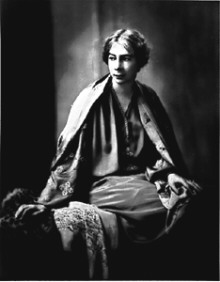
Sara Teasdale lived from 1884 to 1933. "I Am Not Yours" has been on this site since 2003. Readers left comments on it here between 2005 and 2011.
What readers have said
Ilene Novick reads the speaker as wanting all the passion of love while also remaining her own person. ilene novick, 2005
Chii disagrees and reads the plea to be made deaf and blind as a wish to feel love more deeply, as other senses sharpen when one is lost. Chii, 2006
Anj points to the line praising the other as "A spirit beautiful and bright" to argue that the speaker does not dislike this person. In this reading she longs for a blind passion her experience lacks. anj, 2007
Neptune finds the poem sad for both the "I" and the "you" and reads it as ironic. Neptune, 2005
Joy sees the same recurring theme here as in the poet's poem Alone. Joy, 2006
I like it so much,it is so sad,sad for "I" and "you" both,If some one said to you "I am not yours." He does'n love you. A good irony poem.
Margaret MinTaiwan
do u noe when she wrote this? she wrote this right before her marriage! she was doomed to be miserable with the doubt of love in her heart
gabby
i like your poem it was really good have you ever thought about getting it put in a book. well any way you should write more and post them.
Mac.South Africa
A very sad poem indeed albeit beautfully written with great feeling. It is indeed surprising to hear that she wrote this on the night before her wedding day.
ilene novickUnited States
teasdale is saying that she wants to be loved and to feel all the passion that goes with love....she also wants to remain her own person and not give the rest of who she is to anyone....if she were writing in the present day of womens' lib, many would think this was possible....it may be, it may not be....she died in the 30's and i think many people today would think she was ahead of her time but there always were people who had thoughts, many times hidden, which expressed today's sentiments... most men need women and most women need men and as long as this remains, which i think is biological, nothing can really change...
JoyUnited States
first of all can anyone here spell? secondly why do you have to analyze every little detail of the poem? its an excellent poem, and if you are going to talk about it, at least do it coherently. btw, this poem reminds me of her other poem, "Alone." same recurring theme.
ChiiUnited States
She isn't saying she wants to be loved, and feel all the passion of love she is saying she wants to feel love and passion deeper. When she says "Put out my senses, leave me deaf and blind." She is saying leave me deaf and blind so I can feel love more deeply. And if you still don't get what I mean, it's like when one of you senses goes your other ones get stronger, she wants her heart to be stronger. Chii, 16 years
It is so sad. I wonder if somebody forced her to get married?
anjPhilippines
i read in a book once that true love starts when being "in love" ends; when the intense emotion is gone but you still CHOOSE to love someone. maybe it's that blind passion that sara wants to experience: "yet i am i, who long to be lost as a light is lost in light" but it's not that she detests her husband-to-be: "and i find you still a spirit beautiful and bright". she expected love to be like that, passionate, and i guess her experiences fell short.
A thought, Sarah's long time male friend had always been in love with her. She knew he was good for her, but could never love him, even though she wanted to. Instead she was getting married to another man. For some reason she was never attracted to her friend as more than a friend. And you must remember as well, Sarah was emotionally and mentally imbalanced for most of her life... eventually she killed herself. She wrote this poem for the man who loved her, and she could never love in return.
SKKorea, South
Maybe her relationship with Vachel Lindsay(1879–1931)could be a little helpful in understanding this poem. He who once was her friend and married with another has haunted her more or less during her life time.
I like it so much,it is so sad,sad for "I" and "you" both,If some one said to you "I am not yours." He does'n love you. A good irony poem.
do u noe when she wrote this? she wrote this right before her marriage! she was doomed to be miserable with the doubt of love in her heart
i like your poem it was really good have you ever thought about getting it put in a book. well any way you should write more and post them.
A very sad poem indeed albeit beautfully written with great feeling. It is indeed surprising to hear that she wrote this on the night before her wedding day.
teasdale is saying that she wants to be loved and to feel all the passion that goes with love....she also wants to remain her own person and not give the rest of who she is to anyone....if she were writing in the present day of womens' lib, many would think this was possible....it may be, it may not be....she died in the 30's and i think many people today would think she was ahead of her time but there always were people who had thoughts, many times hidden, which expressed today's sentiments... most men need women and most women need men and as long as this remains, which i think is biological, nothing can really change...
first of all can anyone here spell? secondly why do you have to analyze every little detail of the poem? its an excellent poem, and if you are going to talk about it, at least do it coherently. btw, this poem reminds me of her other poem, "Alone." same recurring theme.
She isn't saying she wants to be loved, and feel all the passion of love she is saying she wants to feel love and passion deeper. When she says "Put out my senses, leave me deaf and blind." She is saying leave me deaf and blind so I can feel love more deeply. And if you still don't get what I mean, it's like when one of you senses goes your other ones get stronger, she wants her heart to be stronger.
Chii, 16 years
It is so sad. I wonder if somebody forced her to get married?
i read in a book once that true love starts when being "in love" ends; when the intense emotion is gone but you still CHOOSE to love someone. maybe it's that blind passion that sara wants to experience: "yet i am i, who long to be lost as a light is lost in light" but it's not that she detests her husband-to-be: "and i find you still a spirit beautiful and bright". she expected love to be like that, passionate, and i guess her experiences fell short.
A thought
A thought, Sarah's long time male friend had always been in love with her. She knew he was good for her, but could never love him, even though she wanted to. Instead she was getting married to another man. For some reason she was never attracted to her friend as more than a friend. And you must remember as well, Sarah was emotionally and mentally imbalanced for most of her life... eventually she killed herself. She wrote this poem for the man who loved her, and she could never love in return.
Maybe her relationship with Vachel Lindsay(1879–1931)could be a little helpful in understanding this poem. He who once was her friend and married with another has haunted her more or less during her life time.