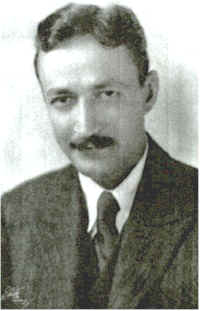
Jean Toomer

Portrait of Jean Toomer
Jean Toomer 1894–1967
1894Born

Jean Toomer (December 26, 1894 - March 30, 1967) was a poet, novelist and an important figure of the Harlem Renaissance.

Born Nathan Pinchback Toomer in Washington, D.C., Jean was of mixed racial descent and spent his childhood attending both all-white and all-black segregated schools. In his early years Toomer resisted racial classifications and wished to be identified only as an American. Toomer attended several colleges for short stints but did not take a degree. The readings that he would undertake and the lectures he attended during his college years shaped the direction his writing would take. After leaving college, Toomer published some short stories, devoted several months to the study of Eastern philosophies and took a job as a principal in Sparta, Georgia. The segregation Toomer experienced in the South lead Toomer to identify more strongly as an African-American. In 1923, Toomer published the experimental novel Cane, his most famous work. A series of poems and short stories about the Black experience in America, Cane was hailed by critics and is seen as an important work of both the Harlem Renaissance and the Lost Generation. In 1926 Toomer went to France to attend the Gurdjieff Institute and was associated with G. I. Gurdjieff until 1935. Toomer was prolific during this period, writing plays, the novel The Gallonwerps and several poems and short stories that appeared in The Dial.

Toomer found it harder and harder to get published throughout the 1930s and in 1940 moved with his second wife to Doylestown, Pennsylvania where he joined the Society of Friends and began to withdraw from society. Toomer wrote a small amount of fiction and published essays in Quaker publications during this time, but devoted most of his time to serving on Quaker committees. Toomer stopped writing literary works after 1950. He died in 1967 after several years of poor health.

Reading closely

Analyses

A full analysis sits under one of these poems: what the poem says, how it is built and how readers here have read it. About the analyses

From readers

What readers say about Jean Toomer

  1. On Her Lips Are Copper Wire

    “This is a great poem. there is so much imagery. "telephone the power-house that the main wires are insulate" is like saying that there is electrical tape on the wires that are the feelings that they have for each other. "then with your toung remove the tape" is like saying remove the hesitation…”

  2. On Reapers

    “the poem doesn't really mean a actual reaper, its symbolic the reaper is supposed to be the African Americans in the fields that have to slave away all day to cut whatever it is the old fashion way. the tools they used looked like a scythe... the dying mouse is a friend or not even just a person…”

  3. On Harvest Song

    “I am stupid so I have no clue what this poem is talking about. I don't take any hard classes because I'm an idiot who can't handle even one AP class. I'm a failure at life and can't even keep a girlfriend becasue I'm married to my video games instead of exercising. I contribute to why America is an…”

  4. On People

    “I teach in a school where there are some 23 different nationalities represented. In English we have been studying Racial Prejudice, I thought this poem was apt. A lot of my students have been posing similar questions about what is colour. I will read this poem tomorrow and see what they think. Any…”

  5. On November Cotton Flower

    “i think these types of poetry helps african americans to understand how things happened back when africans were trying to show how they could become highly educated like other nationalities. This poem shows the value of hard work”

Where readers gather

Most discussed

  1. Her Lips Are Copper Wire5 comments
  2. Reapers4 comments
  3. Harvest Song2 comments
  4. People2 comments
  5. Evening Song1 comment
  6. November Cotton Flower1 comment
  7. The Lost Dancer1 comment
  8. Unsuspecting1 comment

All 17 poems

Poems · 17