there's a bluebird in my heart that
wants to get out
but I'm too tough for him,
I say, stay in there, I'm not going
to let anybody see
you.
there's a bluebird in my heart that
wants to get out
but I pour whiskey on him and inhale
cigarette smoke
and the whores and the bartenders
and the grocery clerks
never know that
he's
in there.
there's a bluebird in my heart that
wants to get out
but I'm too tough for him,
I say,
stay down, do you want to mess
me up?
you want to screw up the
works?
you want to blow my book sales in
Europe?
there's a bluebird in my heart that
wants to get out
but I'm too clever, I only let him out
at night sometimes
when everybody's asleep.
I say, I know that you're there,
so don't be
sad.
then I put him back,
but he's singing a little
in there, I haven't quite let him
die
and we sleep together like
that
with our
secret pact
and it's nice enough to
make a man
weep, but I don't
weep, do
you?
✦
Analysis
Bluebird: analysis
Introduction
"Bluebird" is a short free-verse poem about a tenderness the speaker keeps hidden. The bluebird lives in his heart and "wants to get out". The speaker holds it down with toughness, whiskey and cigarette smoke. He hides it from the people around him and from the readers who buy his books.
At night he lets it out and speaks kindly to it. The poem ends with a question that turns on the reader: "do / you?" It is a confession that still refuses to confess fully.
Summary
The first stanza opens with the poem's refrain: "there's a bluebird in my heart that / wants to get out". The speaker says he is "too tough for him". He speaks to the bird directly and tells it to "stay in there". He will not let anybody see it.
Lines 7–15 repeat the refrain. This time the speaker pours "whiskey on him" and inhales "cigarette smoke". The people he deals with, "the whores and the bartenders / and the grocery clerks", never know the bird is there. The stanza ends on the broken lines "he's / in there."
The second stanza repeats the refrain and the claim to be "too tough for him". Now the speaker's words to the bird are sharper. He tells it to "stay down". He asks whether it wants to "screw up the / works" or "blow my book sales in / Europe".
Lines 26–37 give the refrain a fourth time. Now the speaker is "too clever". He lets the bird out only "at night sometimes / when everybody's asleep". He tells it he knows it is there and that it should not be sad. Then he puts it back, but it is still "singing a little".
The last lines say he has not "quite let him / die". Speaker and bird "sleep together like / that" with their "secret pact". This is "nice enough to / make a man / weep". The speaker says he does not weep. The poem closes by asking the reader, "do / you?"
Themes and meaning
The central theme is tenderness hidden under toughness. The bluebird stands for something soft in the speaker, such as feeling, hope or a capacity for song. He keeps it shut in "my heart" and refuses to "let anybody see". The refrain shows that the bird's wish to get out never stops. The toughness has to be restated each time.
The poem also shows how the feeling is suppressed. The speaker pours "whiskey on him" and inhales "cigarette smoke". Drink and smoke become ways to drown the bird, not just habits. The people he meets, "the whores and the bartenders", see only the surface. Concealment is presented as a daily routine.
A third theme is toughness as a public role. The speaker worries that the bird will "blow my book sales in / Europe". The line is comic, but it admits that the hard image is partly something he sells. His hardness is performed and protected. This makes the mask look calculated rather than natural.
The poem is also about keeping something alive in secret. The speaker lets the bird out only "when everybody's asleep". He has not "quite let him / die". The two share a "secret pact" and sleep together. Care survives, but only in private and at night.
Finally, the poem both confesses and refuses to confess. By speaking the poem, the speaker shows the reader the bird he says he hides. Yet the ending still denies weeping. The last question, "do / you?", can be read as a challenge or as an invitation. Either way, it suggests the reader may keep a hidden bird too.
Tone
The voice is gruff and conversational. The speaker talks to the bird like a man shouting down a nuisance: "stay in there", "stay down". His claim to be "too tough for him" comes twice, flat and unchanged. The repetition makes it sound like a script he recites.
In the second stanza the tone turns comic. The questions about screwing up "the / works" and his "book sales in / Europe" are sarcastic. They mock the speaker as much as the bird.
From line 28 the voice softens. He tells the bird "don't be / sad", the gentlest words in the poem. He admits the pact is "nice enough to / make a man / weep". Then he denies weeping and pushes the question back at the reader. The ending is wry, guarded and tender at once.
Form and structure
The poem is free verse with no rhyme scheme and no regular metre. The archive's text has 46 lines in 2 stanzas, of 15 and 31 lines. Lines range from 1 to 11 syllables.
Its structure comes from a refrain. "there's a bluebird in my heart that / wants to get out" opens the poem. It returns at line 7, line 16 and line 26. Each return starts a new movement, and each movement ends in a different response to the bird.
The line breaks are abrupt. Single words stand alone, such as "you" in line 6, "he's" in line 14 and "die" in line 37. Phrases are cut mid-thought, as in "mess / me up?" These breaks make the speech sound halting and guarded. Most lines and sentences begin in lower case, which keeps the voice casual.
Poetic devices
Symbol line 1
there's a bluebird in my heart The bird stands for a soft, hopeful part of the speaker. A bluebird is small, bright and a singer, the opposite of the tough man he presents.
Refrain line 7
there's a bluebird in my heart that The opening line returns at the start of each movement. Its return shows the bird's pressure to get out never lets up.
Apostrophe line 4
I say, stay in there The speaker addresses the bird as if it could hear. The inner feeling becomes a second character he must manage.
Metaphor line 9
whiskey on him Pouring whiskey on the bird makes drinking a way of drowning feeling. The habit is shown as deliberate suppression.
Polysyndeton line 11
and the whores and the bartenders The repeated "and" lists the people of the speaker's daily round. None of them knows what he hides.
Enjambment line 14
he's The single word on its own line delays "in there". The pause mirrors the speaker's reluctance to admit the bird exists.
Bathos line 24
you want to blow my book sales in After the heart and the bird, the worry drops to book sales. The comic fall exposes toughness as a selling image.
Personification line 35
he's singing a little The bird still sings, however quietly. The feeling survives the whiskey and the smoke.
Rhetorical question line 46
you? The last word turns from the bird to the reader. It dares the reader to admit the weeping the speaker denies.
Words worth knowing
works
Slang for the whole arrangement or machinery. To screw up the works is to wreck everything the speaker has set up.
Context
Charles Bukowski lived from 1920 to 1994. "Bluebird" has been on americanpoems.com since February 2003. Readers left 15 comments on it between 2005 and 2021.
What readers have said
Fisher calls the poem the soft side of the dumb thug, and says it answers charges of misogyny and drunken irrelevance. Fisher, 2005
Leia reads it as gentle and truthful about a softness and innocence most people hide for fear it will be seen. Leia, 2005
Soorej finds it painful, because the usual acceptance of ill fate is set here against quiet desperation. soorej, 2006
Nylorac reads the bluebird as the weak, vulnerable self held down by inhibitions, and got a bluebird tattoo as a reminder of it. nylorac, 2006
Anwar compares the poem to Poe's The Raven, reading both as revelations of a poet's deepest secrets and hidden fears. anwar, 2011
this is the soft side of the dumb thug. it is the precise moment where all the critiques on the mans' assumed mysogony and drunken irrelevances fall out the window. it doesn't get closer to the bone.
LeiaCanada
I really enjoyed this poem. I found it gentle and truthful; and really, looking into something that we tend to hide: a certain soft spot, a gentleness, and innocence- that we cover by other asects of our character, for fear that it be seen.
I really liked it.
Jane KorinecUnited States
I like his poem How is your heart? - Much better.
Jon WhiteUnited States
We all have some "bluebird" in us. A decision is made at some point in life if we should allow it to be heard, or at least allow a flash of a feather to be seen, if only briefly.
flapjack darlingUnited Kingdom
This is bittersweet for me. I relate to what he's saying here. But when you love someone who, in essence, has the same tragedy, then that is truly tragic.
nicely said fisher. but there's something painful about reading this poem. usually he's so accepting of his ill fate. but here, he's juxtaposing it with that quiet desperation. the metaphor gets the feeling across well.
nyloracCanada
This poem expresses the weak, vunerable side of the self, Bukowski has perfectly embodied our accumalation of inhibitions into the symbol of the bluebird which made such an impression upon me that I tattooed a bluebird behind my ear to remind me of the need to recognize that aspect of myself and comemerate Bukowskis truth.
JeffUnited States
This is one of the greatest American poems ever written.
CoryUnited States
Bukowski is one of the very best poets, and this is one of his very best poems. Truer words are hard to find.
MichaelUnited States
Dylan Mckay...
Gerard LovelessCanada
If this is the first time you have read anything of Bukowski, this is only the tip of his vast iceberg. I have always been a poor reader-dyslexia-and Bukowski is very healing. He suffered so that we could see and live more clearly. He is a great German-American classical artist. Read all of Bukowski and you'll know why so many love him.
Solomon in Santa MonicaUnited States
One commentor said: "He suffered so that we could see and live more clearly."
Well, that really has a savior tone, one that I am guessing would make Bukowski sick. Anyway, I don't see his suffering that way, but I do agree he is one of our great poets.
Bukowski wrote his truth, without regard for your white whales. Go ahead, give your life to the reckoning of the worlds best poet. As for us, we will just enjoy the beauty.
anwarKuwait
Similarities between Poe and Bukowski
i coudnt help but found great similarities between Edgar Allen Poe and Charles Bukowski. Especially the two poems: The Raven (Poe) and Bluebird (Bukowki). The two poems can be portrayed as revelations of the true nature of both poets, their deepest secrets, and their hidden fears. this is merely my humble opinion and it may be nonesence, i might need to do a little research on such comparison :).
Is it just me, or is anyone here thinks that Bukowski has some similarities with my fave writer, Edgar Allan Poe? When Mark Manson mentioned Bukowski in his book, The Subtle Art of Not Giving a F*ck, I was thinking of Poe while reading Manson's description of Bukowski.
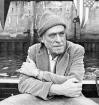
this is the soft side of the dumb thug. it is the precise moment where all the critiques on the mans' assumed mysogony and drunken irrelevances fall out the window. it doesn't get closer to the bone.
I really enjoyed this poem. I found it gentle and truthful; and really, looking into something that we tend to hide: a certain soft spot, a gentleness, and innocence- that we cover by other asects of our character, for fear that it be seen.
I really liked it.
I like his poem How is your heart? - Much better.
We all have some "bluebird" in us. A decision is made at some point in life if we should allow it to be heard, or at least allow a flash of a feather to be seen, if only briefly.
This is bittersweet for me. I relate to what he's saying here. But when you love someone who, in essence, has the same tragedy, then that is truly tragic.
nicely said fisher. but there's something painful about reading this poem. usually he's so accepting of his ill fate. but here, he's juxtaposing it with that quiet desperation. the metaphor gets the feeling across well.
This poem expresses the weak, vunerable side of the self, Bukowski has perfectly embodied our accumalation of inhibitions into the symbol of the bluebird which made such an impression upon me that I tattooed a bluebird behind my ear to remind me of the need to recognize that aspect of myself and comemerate Bukowskis truth.
This is one of the greatest American poems ever written.
Bukowski is one of the very best poets, and this is one of his very best poems. Truer words are hard to find.
Dylan Mckay...
If this is the first time you have read anything of Bukowski, this is only the tip of his vast iceberg. I have always been a poor reader-dyslexia-and Bukowski is very healing. He suffered so that we could see and live more clearly. He is a great German-American classical artist. Read all of Bukowski and you'll know why so many love him.
One commentor said: "He suffered so that we could see and live more clearly."
Well, that really has a savior tone, one that I am guessing would make Bukowski sick. Anyway, I don't see his suffering that way, but I do agree he is one of our great poets.
Ah JJ, you are a complete and utter tool.
Bukowski wrote his truth, without regard for your white whales. Go ahead, give your life to the reckoning of the worlds best poet. As for us, we will just enjoy the beauty.
Similarities between Poe and Bukowski
i coudnt help but found great similarities between Edgar Allen Poe and Charles Bukowski. Especially the two poems: The Raven (Poe) and Bluebird (Bukowki). The two poems can be portrayed as revelations of the true nature of both poets, their deepest secrets, and their hidden fears. this is merely my humble opinion and it may be nonesence, i might need to do a little research on such comparison :).
Is it just me, or is anyone here thinks that Bukowski has some similarities with my fave writer, Edgar Allan Poe? When Mark Manson mentioned Bukowski in his book, The Subtle Art of Not Giving a F*ck, I was thinking of Poe while reading Manson's description of Bukowski.