Biography
[caption id="attachment_589" align="alignleft" width="214"] Billy Collins and Suzannah Gilman, 2015 PEN Gala, May 5, 2015, American Museum of Natural History © Beowulf Sheehan/PEN American Center[/caption]
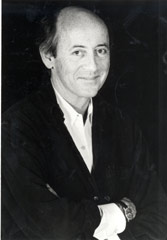
William James Collins, known as Billy Collins, (born March 22, 1941) is an American poet, appointed as Poet Laureate of the United States from 2001 to 2003. In 2016, Collins retired from his position as a Distinguished Professor at Lehman College of the City University of New York after teaching there almost 50 years. Collins is the Senior Distinguished Fellow of the Winter Park Institute at Rollins College, Winter Park, Florida. Collins was considered as a Literary Lion of the New York Public Library (1992) and selected as the New York State Poet for 2004 through 2006. As of 2018, he is a teacher in the MFA program at Stony Brook Southampton.
Billy Collins was born in Manhattan to William and Katherine Collins and grew up in Queens and White Plains, New York. William was born to a large family from Ireland and Katherine was from Canada. In his late seventies, Collins described his childhood to The Wall Street Journal. His mother was a nurse who stopped working to raise their only child. She had the ability to recite verses on almost any subject, which she often did, cultivating in her young son a love of words. Collins attended Archbishop Stepinac High School in White Plains and received a B.A. in English from the College of the Holy Cross in 1963; he received his M.A. and Ph.D. in romantic poetry from the University of California, Riverside. His professors at Riverside included Victorian scholar and poet Robert Peters. There he came under the influence of contemporary poets like Karl Shapiro, Howard Nemerov and Reed Whittemore, and during his adolescence he was influenced by Beat Generation poets as well. In 1975 Collins founded The Mid-Atlantic Review with his friends Walter Blanco and Steve Bailey. In 1971 Collins married Diane Olbright, an architect, and later settled in Westchester County, New York. The couple have since divorced. Collins moved from New York to Winter Park, Florida to be with Suzannah Gilman, now his fiancée.
Read the full biography
His books of poetry include:
Nine Horses (2002) Sailing Alone Around the Room: New and Selected Poems (2001) Picnic, Lightning (1998) The Art of Drowning (1995), which was a Lenore Marshall Poetry Prize</ finalist Questions About Angels (1991), the winner (two years later) of the National Poetry Series competition The Apple That Astonished Paris (1988) Video Poems (1977)
He recorded The Best Cigarette in 1997, a collection of 33 of his poems. He also recorded two of his poems for the audio versions of Garrison Keillor's collection Good Poems (2002).
Collins' poetry is marked by a rejection of restrictive forms such as the villanelle. For instance, his poem Sonnet begins "All we need is fourteen lines, well, thirteen now", and continues in this vein; the "sonnet" is fourteen lines, but does not rhyme and is not, until the final line, iambic pentameter. His Paradelle for Susan is emblematic of his rejection of formal poetry.
Over the years, Poetry magazine has awarded him several prizes in recognition of poems they publish. During the 1990s, Collins has won five such prizes. The magazine also selected him as "Poet of the Year" in 1994. He has received fellowships from the National Endowment for the Arts, the John Simon Guggenheim Foundation in 1993, and the New York Foundation for the Arts.
On On Turning Ten
On Forgetfulness
On Litany
On Directions
On Fishing On The Susquehanna In July
On Nightclub