A poem should be palpable and mute
As a globed fruit,
Dumb
As old medallions to the thumb,
Silent as the sleeve-worn stone
Of casement ledges where the moss has grown--
A poem should be wordless
As the flight of birds.
*
A poem should be motionless in time
As the moon climbs,
Leaving, as the moon releases
Twig by twig the night-entangled trees,
Leaving, as the moon behind the winter leaves,
Memory by memory the mind--
A poem should be motionless in time
As the moon climbs.
*
A poem should be equal to:
Not true.
For all the history of grief
An empty doorway and a maple leaf.
For love
The leaning grasses and two lights above the sea--
A poem should not mean
But be.
✦
Analysis
Ars Poetica: analysis
Introduction
The Latin title means the art of poetry, and the poem sets out a theory of what a poem should be. It does this not by arguing but through images. A poem should be "palpable and mute" like a fruit, "motionless in time" like the climbing moon, and "equal to" an experience rather than true to it.
The poem is in three sections divided by asterisks. Each section opens with "A poem should". It ends with a two-line rule: "A poem should not mean" "But be". The poem tries to practise what it recommends, though it states its case in plain terms as well.
Summary
The first section says a poem should be palpable and mute, like a round fruit. It should be dumb like old medallions to the thumb. It should be silent like the worn stone of window ledges where moss has grown. A poem should be wordless, like the flight of birds.
The second section says a poem should be motionless in time as the moon climbs. The moon releases the night-tangled trees twig by twig as it rises. In the same way it leaves the mind memory by memory, as it moves behind the winter leaves. The section ends by repeating that a poem should be motionless in time as the moon climbs.
The third section says a poem should be equal to, not true. For all the history of grief, a poem offers an empty doorway and a maple leaf. For love, it offers leaning grasses and two lights above the sea. The poem ends by saying a poem should not mean but be.
Themes and meaning
The poem as object. The first section treats a poem as a thing to be touched. It should be "palpable" like a fruit and felt like "old medallions to the thumb". Each comparison is to something silent: fruit, coins, stone, birds in flight. The paradox is that a poem made of words should be "mute" and "wordless". The section suggests a poem works through presence, not through statement.
Timelessness through stillness. The second section asks for a poem "motionless in time". The moon moves, yet seems still from moment to moment. It releases the trees "Twig by twig" and the mind "Memory by memory". The repeated couplet that frames the section makes the poem itself circle back to where it started. A poem should have that quality of slow, unchanging presence.
Image over statement. The third section offers its method. A poem should be "equal to" an experience, "Not true" in the sense of a proposition. Grief is given not as an explanation but as "An empty doorway and a maple leaf". Love becomes "The leaning grasses and two lights above the sea". The images carry the feeling without naming it.
Being, not meaning. The closing couplet sums up the argument. "A poem should not mean" "But be". A poem should exist as an experience, not as a message to be decoded. Readers may notice the irony. The poem makes this claim as a clear statement, which is itself a kind of meaning.
Tone
The tone is calm, assured and quietly authoritative. Each section begins with the confident formula "A poem should". There is no hedging or argument. The poem lays down its principles as if they were self-evident.
The imagery softens this authority. Fruit, moss, moonlight and maple leaves give the poem a gentle, contemplative feel. The second section is especially hushed, with its slow repetitions.
The final section is more compressed and pointed. The colon after "equal to" and the blunt "Not true" sharpen the tone. The last couplet is almost aphoristic. Its two short lines have the finality of a rule.
Form and structure
The poem has 26 lines in 14 stanzas, counting the two asterisk lines that divide it into three sections. Apart from the asterisks, every stanza is a couplet. The couplets of the first and third sections mostly rhyme, as "grief" does with "leaf". Lines 7–8 pair "wordless" and "birds" only loosely. The second section is looser still, and its middle couplets do not rhyme.
Line lengths vary widely, from 1 to 12 syllables. Line 1 runs close to iambic pentameter, but there is no regular metre. Very short lines such as "Dumb" and "But be" stand against longer ones. The second section is framed by a repeated couplet, lines 10–11 and 16–17.
Poetic devices
Simile line 2
As a globed fruit, The poem is compared to a round fruit. It should be something whole and physical, to be held rather than explained.
Paradox line 7
A poem should be wordless A poem is made of words, yet should be wordless. The claim points to an effect beyond statement.
Imagery line 6
Of casement ledges where the moss has grown The worn stone and moss suggest age and stillness. The image is tactile and quiet.
Anaphora line 25
A poem should not mean The phrase "A poem should" opens each section and returns here in a negated form. The repetition builds the poem as a set of rules.
Refrain line 16
A poem should be motionless in time Lines 10–11 return as lines 16–17. The repetition makes the section itself seem still and circular.
Repetition line 13
Twig by twig The pattern returns as "Memory by memory" in line 15. It mimics the gradual movement of moonlight.
Symbol line 22
An empty doorway and a maple leaf. Two plain images stand in for grief. Absence and a fallen leaf suggest loss without naming it.
Imagery line 24
The leaning grasses and two lights above the sea Love is given as a scene. The two lights can be read as a pair of stars or lamps, suggesting two people together.
Rhyme line 26
But be. "be" rhymes with "sea" in line 24. The closing rhyme gives the final rule a sense of completion.
Irony line 25
A poem should not mean The line makes a clear statement of meaning while saying poems should not mean. The poem breaks its own rule in stating it.
Words worth knowing
palpable
Able to be touched or felt. Here a poem should be as physically present as an object.
globed
Round, shaped like a globe.
medallions
Large medals or coin-like disks. Old ones are worn smooth to the touch.
casement
A window that opens on hinges. The ledges are the stone sills beneath it.
Dumb
Unable to speak, silent. It does not mean stupid here.
equal to
Equivalent to, matching in weight. A poem should match an experience rather than make a true statement about it.
What readers have said
Himanshu reads the poem as saying meaning should be implicit, carried by images like the empty doorway and maple leaf rather than stated. Himanshu, 2008
Bruce Deitrick Price thinks the poem has been oversold and blames it for a lot of bad poetry, and he writes parodies in response. Bruce Deitrick Price, 2006
John takes from the poem that a poem need not be true, and can be about anything as a work of art. John, 2007
Neda admires how the poem describes a poem with unusual adjectives. neda, 2012
3275 views and no comments. That tells us something. My own feeling is that MacLeish's poem has been vastly oversold; and it has been responsible for a ton of bad poetry of the McPoem variety. In my essay "The Plight of Poetry" (find it in google) I'm pretty rough on Archibald, even throwing up my own Ars Poetica as a better model to follow. Now, when I'm in a sour mood from reading boring poetry, I try to compose what I call the Archibald--
a poem should electrocute and be hairy like a kiwi fruit...
Archibald is being paradoxical...if you know what that means
JohnUnited States
Poetry is a simple way of expression because it is motionless and it leaves all description in memory. A poem does not need to be true bit it can be about anything need to be and that poetry is a work of art.
HimanshuIndia
MacLeish says that the poem should express its meaning implicitly rather than putting it in explicit sentences. The essence of the poem lies in the imagery it uses. For instance, he says, "grief" can be depicted by images of 'empty doorway' or 'maple leaf'.
Also the essence should not fade away with the passage of time i.e. the central idea of the poem should be relevant forever.
The beauty of the poem is that all what is described as 'the art of poetry' is very effectively implemented in the poem itself.
Ars poetica contains many similes and images that contribute to its essence.
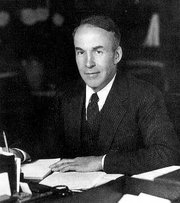
3275 views and no comments. That tells us something. My own feeling is that MacLeish's poem has been vastly oversold; and it has been responsible for a ton of bad poetry of the McPoem variety. In my essay "The Plight of Poetry" (find it in google) I'm pretty rough on Archibald, even throwing up my own Ars Poetica as a better model to follow. Now, when I'm in a sour mood from reading boring poetry, I try to compose what I call the Archibald--
a poem should electrocute
and be hairy like a kiwi fruit...
Yes, that's more like it.
I second that!
Archibald is being paradoxical...if you know what that means
Poetry is a simple way of expression because it is motionless and it leaves all description in memory. A poem does not need to be true bit it can be about anything need to be and that poetry is a work of art.
MacLeish says that the poem should express its meaning implicitly rather than putting it in explicit sentences. The essence of the poem lies in the imagery it uses. For instance, he says, "grief" can be depicted by images of 'empty doorway' or 'maple leaf'.
Also the essence should not fade away with the passage of time i.e. the central idea of the poem should be relevant forever.
The beauty of the poem is that all what is described as 'the art of poetry' is very effectively implemented in the poem itself.
Ars poetica contains many similes and images that contribute to its essence.
Style
What are some distinctive features of Macleish's that make his poerty stand out. I need to know fast because i have to write a paper on that subject.
idea
speaking about poem its an art that Macleish have this art and a good talent for showing it. he describe poem with unique and special adjectives